Mount Etna, Europe’s tallest and most active volcano, erupted in Sicily, Italy, on June 2, Monday, 2025, sending thick ash clouds and lava into the sky. The dramatic eruption caused panic among tourists, triggered aviation alerts, and raised concerns about travel safety in the region.
With Catania Airport facing disruptions, travelers across Europe and the UK are seeking updates on flight statuses and safety advice. This event has drawn attention to Sicily’s volcanic risks and their impact on tourism, a key industry for the island.
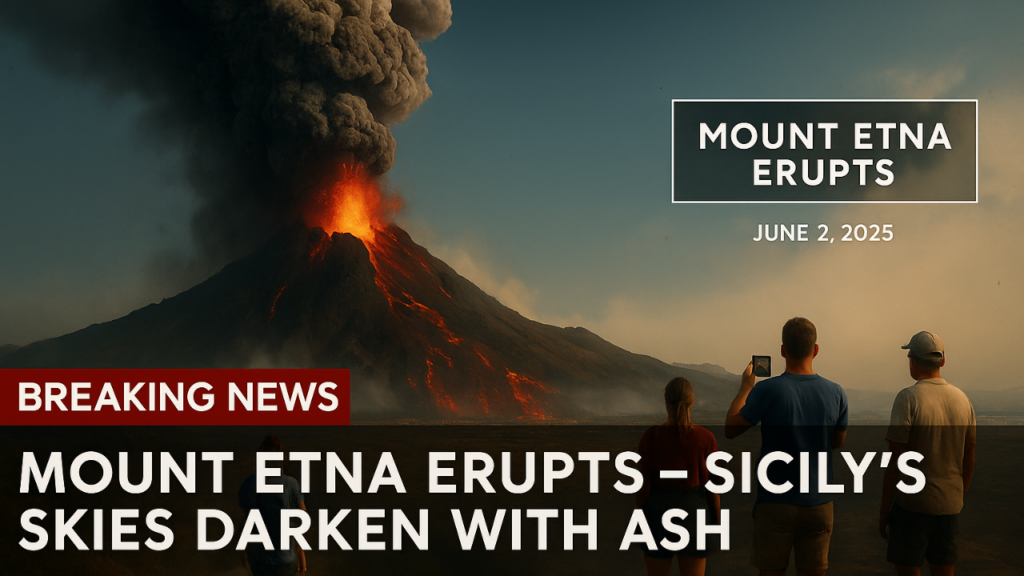
A Fiery Eruption Shakes Sicily
Mount Etna’s eruption began at 3:50 AM local time on June 2, 2025, after volcanic tremors started at midnight.
Italy’s National Institute of Geophysics and Volcanology (INGV) reported that the Southeast Crater, known as Bocca Nuova, unleashed explosive bursts of lava and ash, a type of activity called strombolian eruptions.
By midday, the eruption intensified into a lava fountain phase, with ash plumes soaring to 6,400 meters (21,000 feet). Videos shared on social media showed tourists fleeing down the volcano’s slopes as thick smoke loomed overhead.
Light ash fell over nearby areas like Piano Vetore, a popular spot for trekkers. No injuries were reported, but the situation remains unstable, with high tremor levels indicating ongoing volcanic activity.
The Volcanic Ash Advisory Centre in Toulouse, France, issued a “code red” aviation warning early on June 2 due to the ash cloud’s threat to aircraft engines and visibility. The alert later dropped to orange, allowing Catania Airport to stay operational.
However, some flights from Rome, Milan, and Berlin faced delays, and a few were cancelled. Authorities urged travelers to check flight statuses with airlines, as volcanic activity can change quickly.
Travel Disruptions and Safety Concerns
The eruption has caused significant travel chaos in Sicily, a top destination for European and UK tourists.
Catania Airport, the main hub for the region, saw disruptions, with airlines like Ryanair and easyJet reporting delays or cancellations. If a flight is cancelled or delayed by more than three hours at a UK or EU airport, airlines must offer a refund or a seat on the next available flight, even with a rival carrier.
For package holiday travelers with ATOL-protected operators, options include rebooking or full refunds. Authorities advise checking with airlines and tour operators for updates, as ash clouds can shift rapidly.
Despite the eruption, Sicilian officials say it’s generally safe to visit areas away from Etna’s active zones. Tourists are urged to follow local guidance, avoid restricted areas near the volcano, and stay updated on weather and ash conditions.
Posts on X reflect the urgency, with @steve_hanke writing on June 3, 2025: “Mount Etna erupts in Sicily, Italy spewing ash over 6,000 meters high. Tourists flee as lava flows and Catania Airport faces disruption”
Mount Etna’s History and Impact
Mount Etna, standing at 3,357 meters, erupts frequently, making it one of the world’s most active volcanoes. Earlier eruptions in February and March 2025 also sent ash and lava from the Bocca Nuova crater, but the June event was more intense, drawing global attention.
Volcanologists use Etna’s activity to study eruption patterns, which helps improve safety measures. However, the ash and lava pose risks to nearby towns, agriculture, and tourism, a vital part of Sicily’s economy.
The eruption has sparked concern among UK and European travelers, especially those aged 18–50, who flock to Sicily for its beaches, history, and culture.
Social media posts show both awe and worry, with @euronews stating on June 3, 2025: “Italy’s Mount Etna has erupted again after parts of its southeastern crater collapsed sending plumes of smoke and ash several kilometres above Europe’s largest active volcano”.
The event has also prompted discussions about balancing tourism with safety in volcanic regions.
What Travelers Should Do
For those planning trips to Sicily, experts recommend staying informed. Check airline websites or apps for flight updates, as ash clouds can disrupt schedules suddenly.
Avoid hiking or touring near Etna’s active craters, and follow local authority advice. Hotels and tour operators in Catania and nearby towns like Taormina remain open, but travelers should confirm bookings.
The UK Foreign Office has not issued a travel ban but advises caution and checking local news.
Sicily’s allure as a travel hotspot remains strong, but Etna’s eruption serves as a reminder of nature’s power. As the situation evolves, authorities and volcanologists are monitoring Etna closely to ensure safety for residents and visitors.
An X post by @improvethenews on June 3, 2025, emphasized: “MOUNT ETNA ERUPTION TRIGGERS MASS TOURIST EVACUATION”, highlighting the need for strict safety measures.
Looking Ahead
Mount Etna’s latest eruption underscores the challenges of managing tourism in a volcanic region. While the situation is under control, travelers should stay alert and flexible.
Sicily continues to welcome visitors, but Etna’s activity may affect plans, especially for those flying into Catania.
The event has also sparked renewed interest in volcanic science, with experts calling for better eruption forecasting to protect lives and livelihoods.